Contact Us Call Now Email
Call Now Email Enquiry

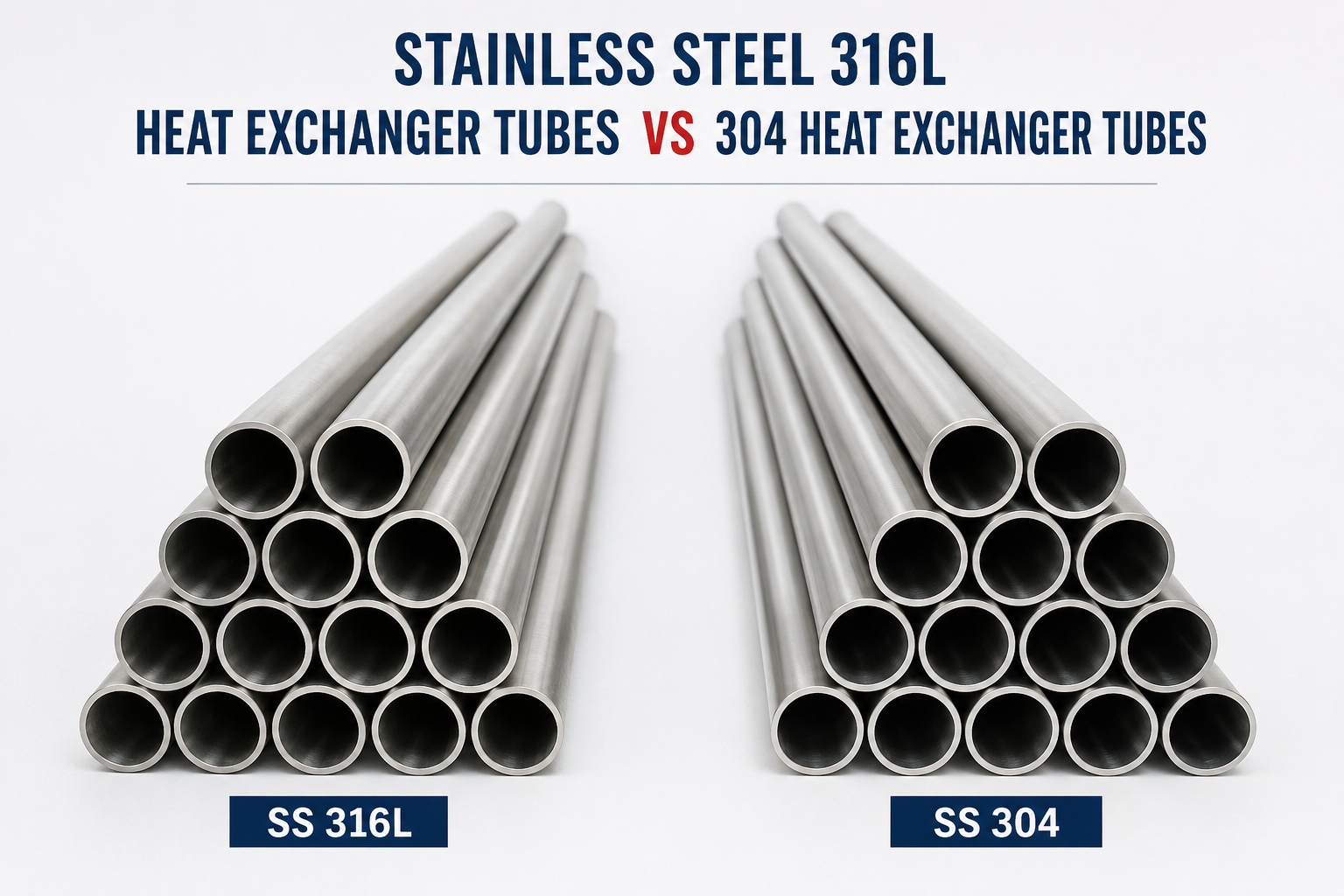
Stainless Steel 316L Heat Exchanger Tubes vs 304 Heat Exchanger Tubes

Stainless Steel Tube Comparison

A heat exchanger tube sits in constant contact with process fluids, cooling water, and temperature swings for years without a break. Choosing between stainless steel 316L heat exchanger tubes vs 304 determines how long those tubes last before pitting, cracking, or fouling forces a shutdown. SS 304 costs less upfront. SS 316L resists chlorides and … Read more

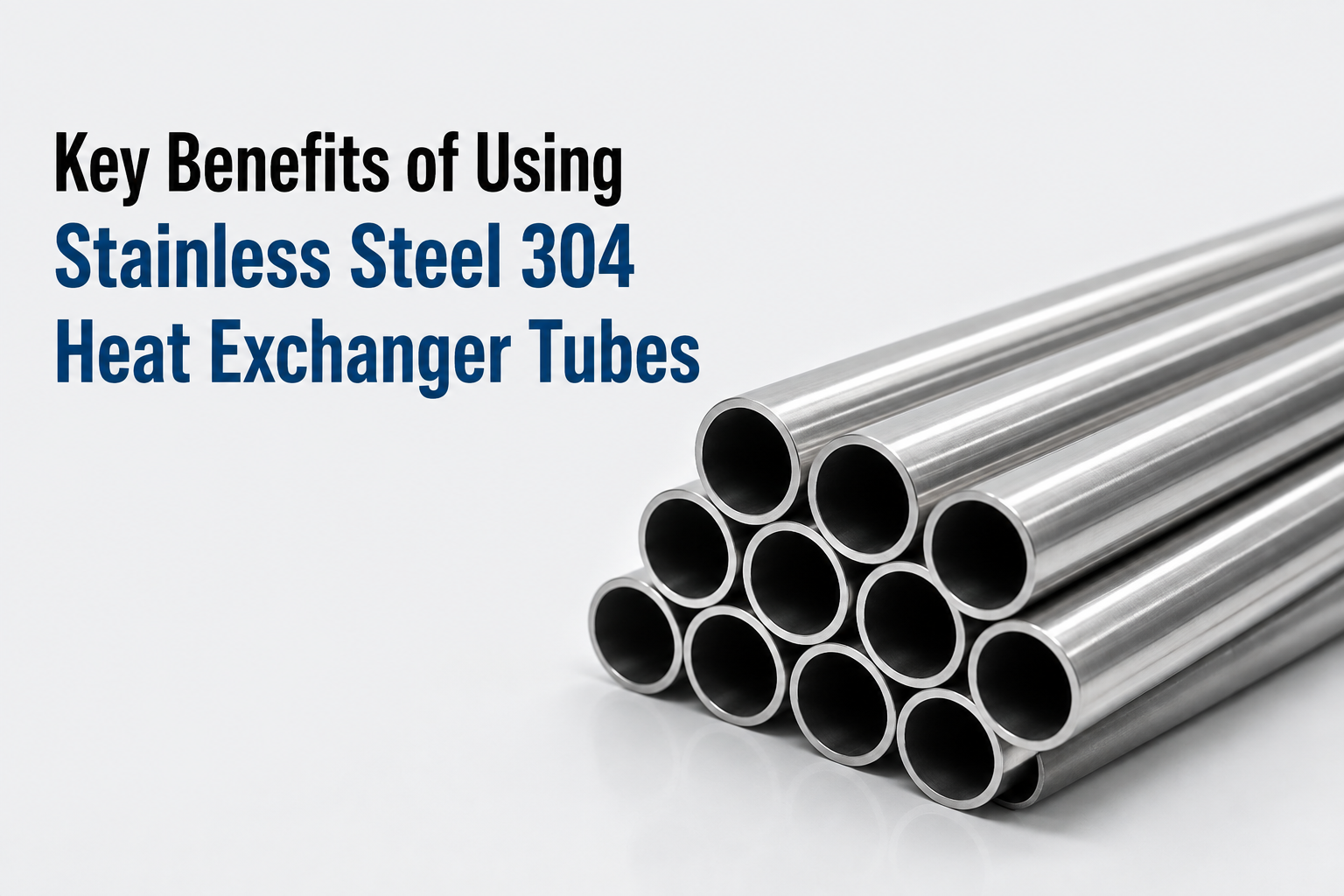
Key Benefits of Using Stainless Steel 304 Heat Exchanger Tubes

Stainless Steel 304 Heat Exchanger Tubes

Every heat exchanger depends on tube walls that survive years of thermal cycling without pitting, cracking, or losing conductivity. The grade 304 stainless steel is used in exchanger design because of its ability to provide resistance to corrosion by the formation of a chromium oxide layer and its high ability to conduct heat over a … Read more

904L Stainless Steel Pipes: Features, Benefits, and Industrial Uses

904L Stainless Steel Pipes

Standard stainless steel doesn’t last long in sulfuric acid, phosphoric acid, or chloride-heavy media. It pits, it corrodes, and plants end up replacing pipe sooner than they’d like. 904L stainless steel pipes are built for that problem. Industries move to this grade over 304 or 316 once acid strength, temperature, or chloride levels get high … Read more

TP347 vs TP347H Seamless Tubes: Understanding the Differences

TP347 vs TP347H Seamless Tubes: Understanding the Differences

Demand for stabilized austenitic seamless tubing has climbed alongside higher operating temperatures across refineries and power plants. TP 347 stainless steel and its higher carbon variant, TP347H, dominate that space. Governed by ASTM A213 and ASTM A312 specifications, both niobium-stabilized grades share adjacent UNS designations (S34700 and S34709) but differ in their carbon content. This … Read more

Stainless Steel 347 vs 321 Pipe: Mechanical Properties, Benefits, and Applications

Stainless Steel 347 vs 321 Pipe

Stabilized austenitic stainless steel pipes solve a problem standard grades cannot handle, which is carbide precipitation at grain boundaries during prolonged exposure to 800-1500°F. This is a condition called sensitization that strips corrosion resistance. A stainless steel 347 pipe and a stainless steel 321 pipe both resist this failure, but through different stabilizing elements that … Read more

TP310 vs TP310S Seamless Tubes: Material Selection Guide

TP310 vs TP310S Seamless Tubes: Material Selection Guide

Furnace builders and refinery engineers ask the same question whenever a line runs past 1000°C. Both grades offer comparable oxidation resistance with 24% to 26% chromium and 19% to 22% nickel, but carbon content separates the two. That single difference shifts creep strength one way and weldability the other. This guide compares composition, heat resistance, … Read more

How Are Stainless Steel 304 Seamless Pipes Manufactured?

Stainless steel pipes manufacturing

Stainless steel 304 seamless pipes are widely used in process industries, petrochemicals, food processing and power plants. Their demand has been growing steadily, mainly because buyers need pipes that can withstand pressure, heat and corrosive environments without failing. The pipes are structurally consistent because they are made without seams. This eliminates the localized structural vulnerabilities … Read more

Complete Selection Guide for Stainless Steel Tubes in EPC Projects

Complete selection guide for stainless steel tubes

Tubing systems are essential for the continuation of operations in Engineering, Procurement and Construction environments. Stainless Steel Tubes are very durable and provide perfect fluid handling. Complex variables like pressure thresholds, aggressive environments, strict compliance and life cycle costs are constantly challenging engineers. This framework helps contractors to identify better industrial tubing solutions to ensure … Read more

Stainless Steel 317 Welded Pipes vs 316: Which One Fits Your Application Better?

SS 316 vs SS 317 Welded Pipes Comparison Manufacturer India

Selecting the appropriate pipe material is critical to the safety and lifespan of any industrial operation. Stainless Steel 317 Welded Pipes and SS 316 are both commonly used in corrosive or high-temperature environments, as they provide exceptional strength and corrosion resistance. However, even slight differences in their chemical composition have a huge impact on their … Read more