
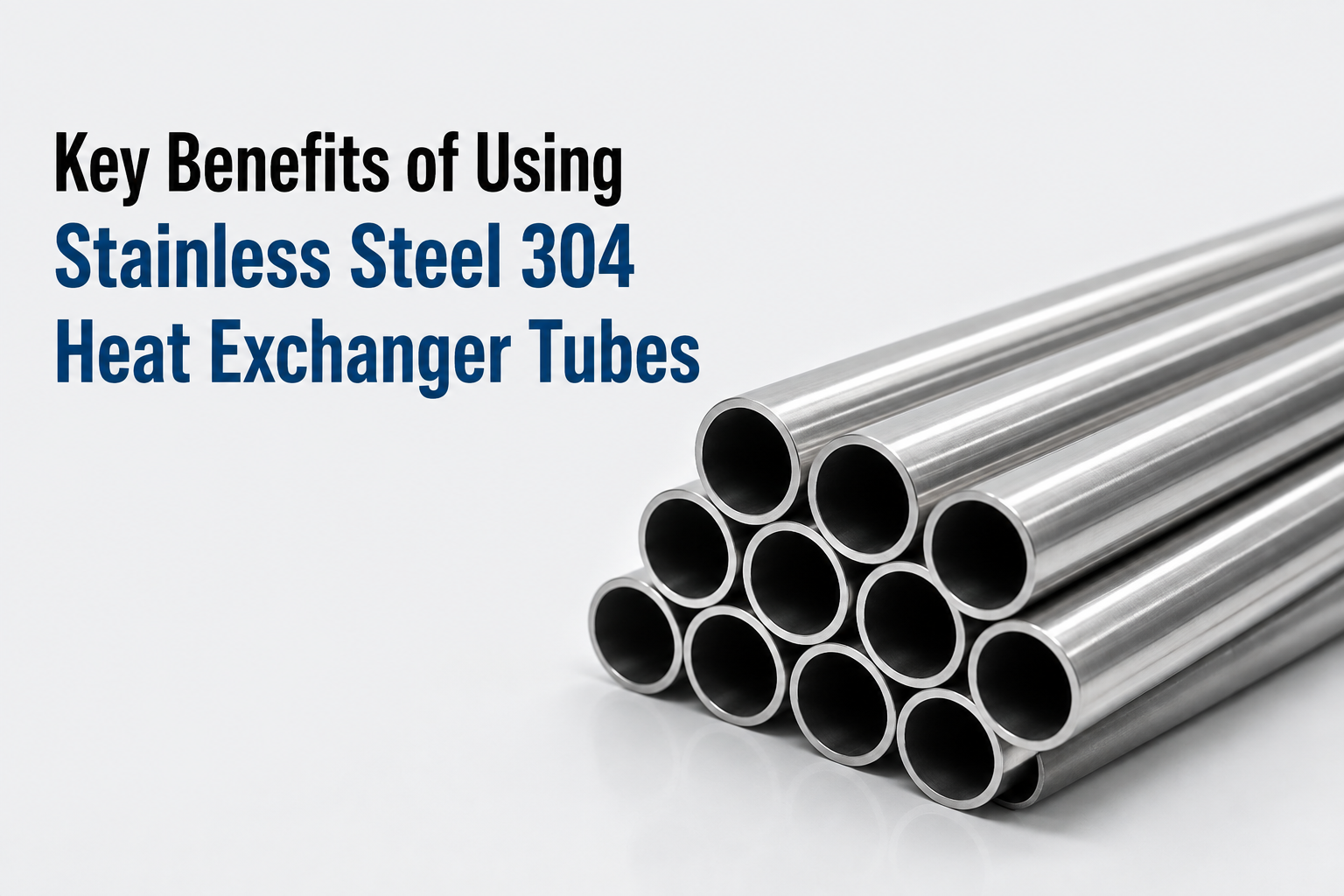
Every heat exchanger depends on tube walls that survive years of thermal cycling without pitting, cracking, or losing conductivity. The grade 304 stainless steel is used in exchanger design because of its ability to provide resistance to corrosion by the formation of a chromium oxide layer and its high ability to conduct heat over a broad temperature range. From reduced maintenance costs to extended service life, this article details some of the practical benefits of stainless steel 304 heat exchanger tubes, assisting engineers in deciding which grade to place an order for when considering the various options in the heat exchanger tube market.
What Are Stainless Steel 304 Heat Exchanger Tubes?
Grade 304 is an austenitic stainless steel built around 18% chromium and 8% nickel, a ratio that forms a passive oxide layer resisting rust and general corrosion. Low carbon content keeps the grade weldable without sensitisation at fabrication temperatures up to 400°C. Heat exchanger tubes made from this alloy combine ductility with tensile strength above 515 MPa, letting fabricators bend and expand tube ends without splitting. Refineries, HVAC manufacturers, chemical plants, and food processing units specify SS 304 heat exchanger tubes for this combination. MBM TUBES manufactures these as stainless steel seamless tubes to tolerances suited for exchanger bundles of any bore size.
Key Benefits of Stainless Steel 304 Heat Exchanger Tubes
Eight distinct properties explain why plant engineers keep specifying this grade for new installations, spanning corrosion resistance, heat transfer efficiency, fabrication ease, and long-term operating cost.
Excellent Corrosion Resistance
The chromium oxide layer on SS 304 self-repairs when scratched, blocking moisture and mild chemicals from reaching the metal beneath, keeping tube walls intact for 15 to 20 years in fresh and lightly treated water service.
High Heat Transfer Efficiency
SS 304 has a thermal conductivity of about 16.2 W/mK, which is low enough to keep thermal resistance low throughout the tube wall. Thinner walls transfer heat faster than thicker alternatives, so exchangers reach target outlet temperatures using less surface area.
Strong Mechanical Strength
SS 304 tubes with tensile strength over 515 MPa and yield strength around 205 MPa withstand deformation from internal pressure and mechanical vibration, rarely cracking from fatigue during daily industrial start-stop cycles.
Good Temperature Resistance
SS 304 is dependable in continuous service from -196°C to 870°C, from cryogenic lines to high-temperature steam applications. Thermal expansion remains predictable, reducing stress at tube sheet joints during cyclic operation.
Easy Fabrication and Welding
Low carbon content keeps SS 304 free from carbide precipitation during welding, so fabricators join tubes with standard TIG or orbital equipment. Stainless steel welded tubes hold consistent wall thickness through tight U bends.
Low Maintenance Requirements
Because the oxide layer resists pitting and scale buildup, SS 304 tubes need cleaning cycles roughly 30% less often than carbon steel equivalents in similar service, and fewer shutdowns mean higher plant uptime.
Hygienic Surface Finish
A smooth, non-porous surface finish down to Ra 0.4 micrometres prevents bacterial growth and residue buildup inside tube bores. Food processing and pharmaceutical plants specify this finish for cleaning validation between batches.
Cost-Effective Long-Term Performance
A 15- to 20-year service life combined with lower cleaning frequency offsets the higher upfront material cost compared to carbon steel, with total lifecycle spending falling below alternatives once counted.
Common Applications of Stainless Steel 304 Heat Exchanger Tubes
Four industries account for most SS 304 heat exchanger tube installations worldwide, each drawing on a different combination of corrosion resistance, hygiene, and thermal performance.
Power Generation Plants
SS 304 tubes are used in power plant condensers & feed water heaters to prevent scaling of treated water at higher pressure and to increase the service interval between planned outages by 3 to 5 years.
Chemical Processing Industry
When process fluids contain mild acids, alkalis or solvents, SS 304 heat exchanger tubes ensure consistent heat transfer rates for batch production runs in reactors and distillation columns.
Food and Beverage Processing
The tubes of pasteurizers and cooling systems are made of SS 304 as the hygienic finish is in compliance with FDA and 3-A sanitary standards for direct product contact. Stainless steel U tubes reduce weld joints inside bundle assemblies.
HVAC and Refrigeration Systems
Chillers and air handling units use SS 304 tubes where humidity and condensate would corrode carbon steel within two to three operating seasons, while the grade withstands compressor vibration without fatigue failure.
When Should You Choose SS 304 Heat Exchanger Tubes?
For applications involving fresh water, steam, mild chemicals or food-grade fluids, and low chloride levels, where operating temperatures are below 870°C, SS 304 is suitable for most heat exchanger uses. Seawater cooling, brine circuits and offshore installations use higher steel grades like 316 or duplex steels with molybdenum for pitting and crevice corrosion resistance.
Conclusion
Stainless Steel 304 heat exchanger tube is a regular specification in the process industries due to its corrosion resistance, efficient heat transfer, mechanical strength, ease of fabrication and low cost. Engineers choosing the material for a new exchanger should compare the operating temperature, fluid chemistry and hygiene requirements with these properties, only upgrading the material to alloy grades such as 316 if there is exposure to chloride service.


