
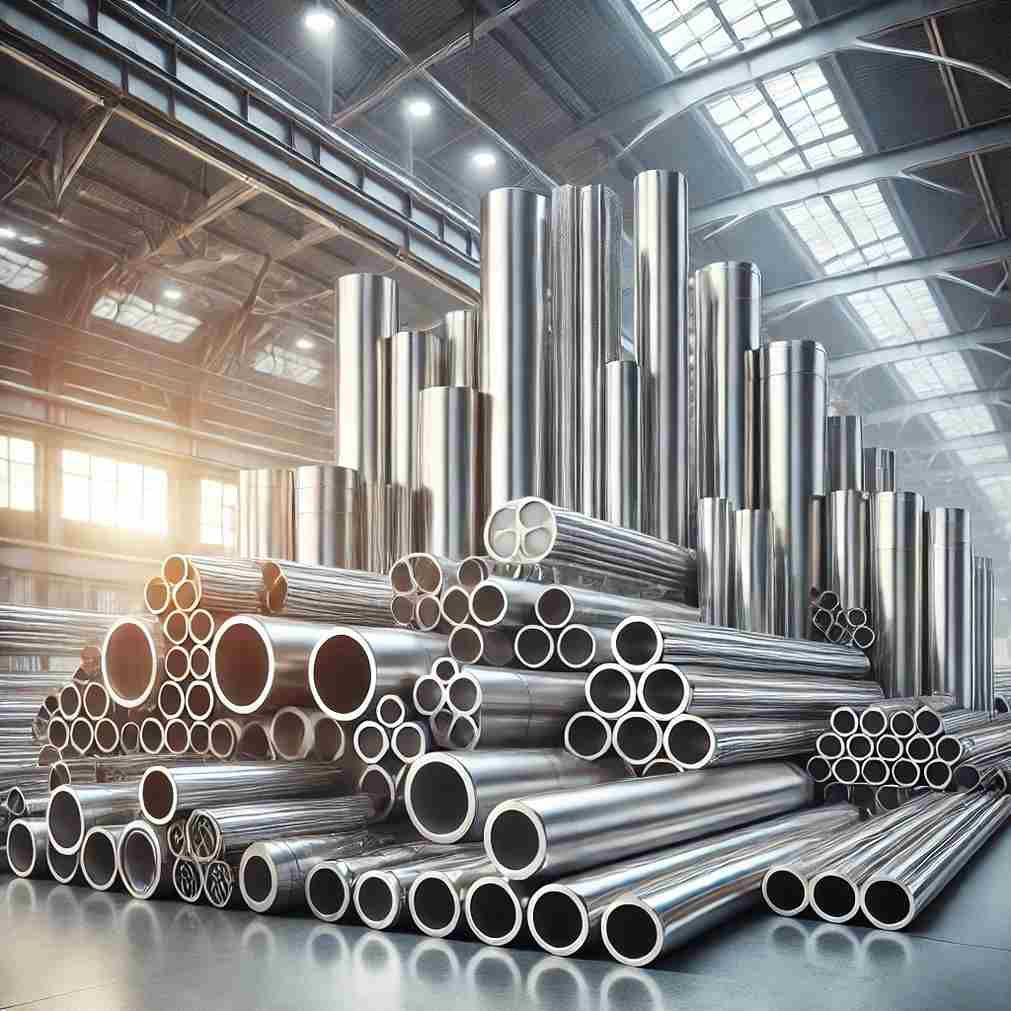
Stainless steel pipes are among the most versatile and widely used materials in various industries. Known for their strength, corrosion resistance, and aesthetic appeal, they serve as an integral component in sectors ranging from construction to oil and gas. In this detailed blog, we’ll explore stainless steel pipe specifications, including material grades, manufacturing processes, dimensions, standards, and pricing.
What Are Stainless Steel Pipes?
Stainless steel pipes are hollow, cylindrical structures manufactured using an alloy of iron, chromium, and other elements like nickel and molybdenum. The chromium content, typically above 10.5%, forms a protective oxide layer that prevents corrosion.
These pipes are categorized into:
- Seamless Stainless Steel Pipes: Produced without welding, offering exceptional strength and durability.
- Welded Stainless Steel Pipes: Made by welding steel sheets, suitable for applications where cost-efficiency is key.
Key Specifications of Stainless Steel Pipes
To select the right stainless steel pipe, you need to understand the following specifications:
A. Material Grades
Different grades are designed for specific applications:
- 304 Stainless Steel Pipes: The most versatile and commonly used grade. Excellent corrosion resistance in normal environments.
- 316 Stainless Steel Pipes: Enhanced resistance to chlorides and harsh chemicals, making it ideal for marine and chemical industries.
- 321 Stainless Steel Pipes: Excellent for high-temperature environments due to its titanium stabilization.
- 409 Stainless Steel Pipes: Popular in automotive applications for exhaust systems.
- 904L Stainless Steel Pipes: High corrosion resistance in acidic environments, used in chemical industries.
B. Manufacturing Types
- Seamless Pipes: High tensile strength and smooth finish, suitable for critical applications like high-pressure systems.
- Welded Pipes: Available in larger diameters and cost-effective, often used in low-pressure environments.
C. Pipe Dimensions
- Outer Diameter (OD): Determines the size of the pipe, ranging from 6mm to over 2500mm.
- Wall Thickness (WT): Measured in schedules (SCH), e.g., SCH 10, SCH 40, SCH 80.
- Length: Available in standard lengths (6m or 12m) or custom cut sizes.
D. Standards and Certifications
Adhering to international standards ensures the pipes meet quality and safety requirements:
- ASTM A312: Seamless and welded pipes for high-temperature and general applications.
- ASTM A358: Electric fusion welded pipes for high-temperature service.
- ASME B36.19M: Defines dimensions for stainless steel pipes.
- API 5L: Standards for pipelines in the oil and gas industry.
E. Surface Finishes
- Mill Finish: Standard finish for industrial applications.
- Polished Finish: Used in decorative or hygienic environments like food processing.
- Pickled Finish: Offers improved corrosion resistance, ideal for harsh environments.
Applications of Stainless Steel Pipes
Stainless steel pipes are indispensable in numerous industries.
- Construction: Used for handrails, structural supports, and decorative elements.
- Oil & Gas: Seamless pipes are used for transporting high-pressure fluids and gases.
- Chemical Processing: SS 316 and SS 904L pipes resist harsh chemicals.
- Automotive: SS 409 pipes for durable exhaust systems.
- Food & Beverage: Hygienic and corrosion-resistant pipes for processing systems.
Common Stainless Steel Pipe Grades and Their Uses
| Grade | Properties | Applications |
|---|---|---|
| 304 | Affordable, corrosion-resistant, versatile. | Plumbing, construction, food processing. |
| 316 | Superior resistance to chloride environments. | Marine, pharmaceutical, and chemical industries. |
| 321 | High-temperature stability due to titanium. | Heat exchangers, aerospace. |
| 409 | Affordable and good for oxidation resistance. | Automotive exhaust systems. |
| 904L | High corrosion resistance in acidic environments. | Chemical, petrochemical, and power plants. |
Price Factors for Stainless Steel Pipes
The price of stainless steel pipes is influenced by:
- Grade: Higher grades like SS 316 and SS 904L are more expensive than SS 304.
- Dimensions: Larger diameters and thicker walls increase cost.
- Manufacturing Type:
- Seamless pipes are generally more expensive than welded ones.
- Welded pipes are cost-effective for larger diameters.
- Surface Finish: Polished and specialty finishes add to the cost.
Approximate Price Range:
- 304 Stainless Steel Pipe Price: ₹200 to ₹400 per kg in India.
- 316 Stainless Steel Pipe Price: ₹350 to ₹650 per kg.
- Stainless Steel Seamless Pipe Price: ₹400 to ₹800 per kg.
Advantages of Stainless Steel Pipes
- Corrosion Resistance: Withstand exposure to water, chemicals, and extreme environments.
- Strength: Excellent tensile strength ensures durability.
- Low Maintenance: Resistant to rust and stains, requiring minimal upkeep.
- Eco-Friendly: Fully recyclable, reducing environmental impact.
- Aesthetic Appeal: Polished finishes for decorative purposes.
Conclusion
Stainless steel pipes are a cornerstone of modern industry due to their durability, corrosion resistance, and versatility. Understanding the specifications, such as grades, dimensions, and manufacturing processes, helps ensure the right choice for your application. Whether you need 304 stainless steel seamless pipes for plumbing or 316 stainless steel pipes for marine environments, selecting a trusted supplier guarantees quality and reliability.